
Containerized Offline Workflows: Leveraging Kubernetes for Distributed Argo Workflows
This blog post explores how Kubernetes clusters equipped with Argo Workflows can be leveraged for orchestrating offline tasks and batch computing jobs in a cloud-native way. Traditional Batch Computing vs. Kubernetes Clusters While mainstream batch computing systems offer solutions for managing and executing batch jobs, they often require users to: Kubernetes Clusters for Distributed Argo…

KubeFM: Building a Home Lab on Kubernetes with Talos (ft. Mircea-Pavel Anton)
Have you ever dreamt of taking your home lab to the next level with the power and flexibility of Kubernetes? Today, we’re thrilled to unlock some valuable insights for you! This blog post delves into the recent KubeFM episode featuring Mircea-Pavel Anton. Mircea embarked on a fascinating journey, migrating his home lab to the exciting…
Guide to Containers and Kubernetes for Enterprise Leaders
Containers and Kubernetes are becoming increasingly important for building cloud-native applications and enabling multi-cloud deployments. This blog post answers the most common questions that CTOs and technology leaders have about these technologies. Benefits and Challenges Key Findings Recommendations Top 10 FAQs with Answers 1) What are some of the key benefits of containers and Kubernetes?…
DevOps Kathmandu: Containers & Secure AWS Architecture
Hi, DevOps enthusiasts! The 34th episode of DevOps Kathmandu promises engaging discussions on two hot topics: Container Internals and Architecting AWS with a Security Focus. This meetup welcomes everyone from seasoned professionals to curious newcomers. Understanding Containers by Building One Ever wondered what exactly containers are? This session will break it down for you. Through…

Get Your ClickHouse & Nutanix Questions Answered in Live Q&A!
Missed the ClickHouse & Nutanix Bangalore meetup in March? No worries! Join us for a live virtual Q&A forum on Monday, April 15th, 2024 at 12:00 PM IST. Industry experts from ClickHouse and Nutanix will be there to address any lingering questions you have from the meetup, or anything else on your mind related to…

Backstage Kubernetes: Simplifying Service Management for Developers
For developers deploying on Kubernetes, managing services across multiple clusters can be a tangled mess. Backstage Kubernetes cuts through the complexity, offering a centralized hub for everything related to your services. Consolidate and Conquer Backstage Kubernetes goes beyond being a standalone monitoring tool. It integrates seamlessly with Backstage’s core service catalog, creating a unified platform…

HashiCorp Terraform 1.7 released
HashiCorp Terraform 1.7 is here, bringing exciting new features to streamline your infrastructure management workflows. This update focuses on improving testing capabilities and state manipulation, empowering developers and operators alike. Revolutionizing Terraform Module Testing Terraform 1.7 introduces groundbreaking test mocking functionalities within the Terraform testing framework. This allows developers to simulate various scenarios without actually…
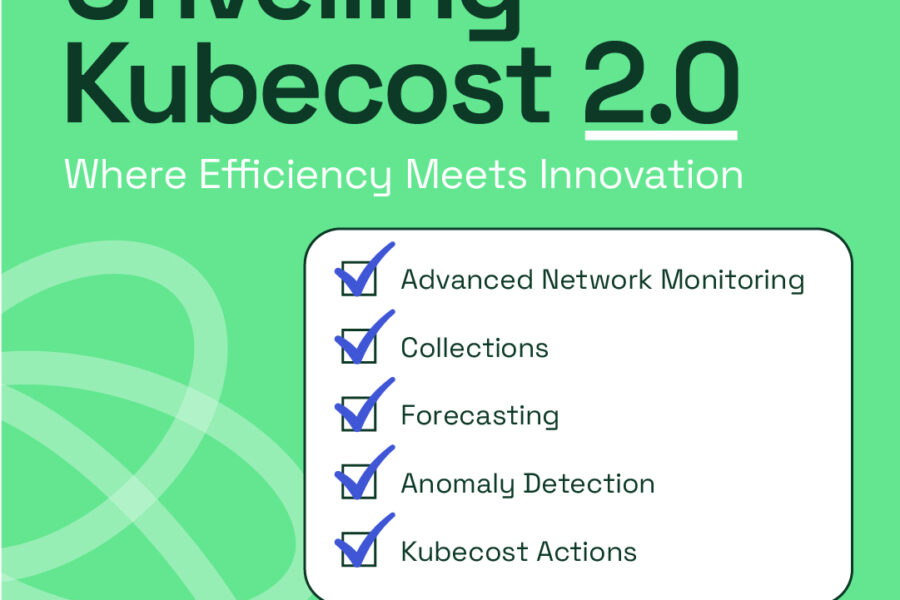
Kubecost 2.0 Empowers Cost Control with Network Visibility
The way organizations manage their Kubernetes costs is undergoing a significant transformation. Kubecost, a leading provider of Kubernetes cost monitoring and management solutions, recently unveiled Kubecost 2.0, a major upgrade packed with features designed to empower businesses to optimize their cloud spending. Unveiling Network Visibility: A Game Changer One of the most significant additions in…

From Containers to Pipelines: How Dagger Builds on Docker’s Legacy
Remember Docker? The revolutionary containerization platform that transformed software development? Solomon Hykes, its creator, is back with a new venture – Dagger. This time, he’s tackling a different challenge: the complexity of CI/CD pipelines. Why Pipelines Matter (and Why They’re a Mess) In a recent interview, Hykes dives into the frustrations developers face with inflexible…
CNCF Survey Reveals: Half of Companies Overspend with Kubernetes, Primarily Due to Overprovisioning
CNCF’s recent microsurvey on cloud-native FinOps and CFM revealed insights into Kubernetes’ impact on cloud spending. Nearly half of respondents reported increased costs, while others saw no change or savings post-migration. The main factors contributing to overspending include overprovisioning, lack of awareness, and resource sprawl. The survey sought details on Kubernetes spending and overall cloud…